
 https://doi.org/10.4081/jlimnol.2026.2270
Local ecological knowledge and attitude toward the Great Cormorant (Phalacrocorax carbo) among the fishermen's community at Beni Haroun Dam, Algeria
All claims expressed in this article are solely those of the authors and do not necessarily represent those of their affiliated organizations, or those of the publisher, the editors and the reviewers. Any product that may be evaluated in this article or claim that may be made by its manufacturer is not guaranteed or endorsed by the publisher.
Accepted: 28 September 2026
Published: 19 October 2026
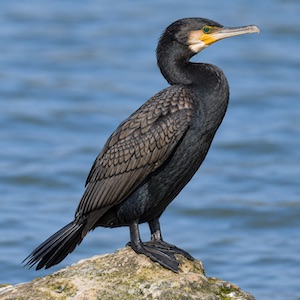
Incorporating the perspectives of local fishing communities and their ecological knowledge (LEK) can enhance policymaking and improve wildlife and economic management strategies. This study aimed to evaluate the local ecological knowledge of fishermen at Beni Haroun Dam regarding the Great Cormorant (Phalacrocorax carbo) a species legally protected under Algerian law, and to reveal their conservation attitudes toward this species. We qualitatively evaluated and analyzed the respondents' local ecological knowledge, while their attitudes were quantitatively assessed by correlation with factors from the sociological and fishing profiles. Fishermen successfully identified the ecological properties of cormorants, including their habitats, prey types, and foraging behavior. They demonstrated a generally favorable attitude towards the conservation of Great Cormorants. Fishermen's reports were compared against published data on a topic-by-topic basis, showing a moderate to relatively high level of ecological knowledge overall, alongside some notable overestimations (e.g., in daily food intake and residency duration). No significant connections were identified between fishermen's attitudes and any socio-demographic or fishing-related variables. We therefore reiterate the significance of the current study as foundational knowledge about P. carbo in Beni Haroun Dam and the incorporation of Local Ecological Knowledge into conservation strategies and future ecological studies for Mediterranean inland freshwater habitats.
Downloads
Aðalsteinsson S, López A, Bregnballe T, 2023. Timing of spring migration of Norwegian Great Cormorants: long-term trends and effects of winter severity. Seabird 35:54-75. DOI: https://doi.org/10.61350/sbj.35.54
Agence Nationale des Barrages et Transferts (ANBT), 2014. [Résultats de la bathymétrie et du sonar latéral].[in French]. Service d'exploitation du barrage de Beni Haroun.
Avibase, 2025. Avibase - The World Bird Database. Lepage D, Birds Canada. Accessed: Mai 2025. Available from: https://avibase.bsc-eoc.org/avibase.jsp?lang=EN
Belfethi L, Moulai R, 2022. Diet, prey selection and biomass consumption of the Great Cormorant (Phalacrocorax carbo) in Algeria. Zoodiversity 56:57-66. DOI: https://doi.org/10.15407/zoo2022.01.057
Benmetir S, Bediaf S, Boucheker A, Gherib A, Lazli A, 2020. [Données préliminaires sur l'hivernage du Grand Cormoran [Phalacrocorax carbo (Linnaeus, 1758)] dans la Numidie orientale (nord-est algérien)].[Article in French]. Bull Soc Zool Fr 145:155-167.
Bensaci E, Saheb M, Nouidjem Y, Bouzegag A, Houhamdi M, 2013. [Biodiversité de l'avifaune aquatique des zones humides sahariennes: cas de la dépression d'Oued Righ (Algérie) ].[Article in French]. Physio-Geo 7:211-222. DOI: https://doi.org/10.4000/physio-geo.3198
Bouchareb N, Chouaib RA, Meriem L, Abdelaziz B, Salah K, Sara B, Mohamed C, 2025. Monitoring water quality in Beni Haroun Dam, Northeastern Algeria: application of Water Quality Index (WQI), Pollution Index (PI), and statistical analyses. Desalin Water Treat 323:101267. DOI: https://doi.org/10.1016/j.dwt.2025.101267
Bouldjedri M, Mayache B, 2020. Structure of waterbird assemblages in fragmented coastal wetlands of Northeastern Algeria. Arx Misc Zool 18:123-142. DOI: https://doi.org/10.32800/amz.2020.18.0123
Braga HO, Pardal MÂ, da Cruz RCM, Alvarenga TC, Azeiteiro UM, 2018. Fishers' knowledge in Southeast Brazil: the case study of the Brazilian sardine. Ocean Coast Manage 165:141-153. DOI: https://doi.org/10.1016/j.ocecoaman.2018.08.021
Braga HO, Schiavetti A, 2013. Attitudes and local ecological knowledge of expert fishermen in relation to conservation and bycatch of sea turtles (Reptilia: Testudines), Southern Bahia, Brazil. J Ethnobiol Ethnomed 9:15. DOI: https://doi.org/10.1186/1746-4269-9-15
Carss DN, 2022. There must be some kind of way out of here: towards 'reframing' European cormorant-fisheries conflicts. Ardea 109:667-681. DOI: https://doi.org/10.5253/arde.v109i2.a31
Carss DN, Bell S, Marzano M, 2009. Competing and coexisting with cormorants: ambiguity and change in European wetlands, p. 99-121. In: S. Heckler (ed.), Landscape, process and power. Berghahn Books. DOI: https://doi.org/10.1515/9781845459048-007
Čech M, Čech P, Kubečka J, Prchalová M, Draštík V, 2008. Size selectivity in summer and winter diets of Great Cormorant (Phalacrocorax carbo): does it reflect season-dependent difference in foraging efficiency? Waterbirds 31:438-447. DOI: https://doi.org/10.1675/1524-4695-31.3.438
Čech M, Vejřík L, 2011. Winter diet of Great Cormorant (Phalacrocorax carbo) on the River Vltava: estimate of size and species composition and potential for fish stock losses. Folia Zool 60:129-142. DOI: https://doi.org/10.25225/fozo.v60.i2.a7.2011
Chabou S, Khammar H, Hadjab R, Saheb M, 2020. Avifauna composition of two natural and artificial wetlands in Jijel region of North-eastern Algeria (the Beni Haroun Dam and Redjla Marsh). Ecol Env Conserv 26:1435-1449.
Chebbah L, Kabour A, 2023. Characterization of leakage water flows in the subsoil of Beni Haroun dam by hydrogeological approach. Acta Hydrol Slovaca 24:14-23. DOI: https://doi.org/10.31577/ahs-2023-0024.01.0003
Cheung FM, van de Vijver FJR, Leong FTL, 2011. Toward a new approach to the study of personality in culture. Am Psychol 66:593-603. DOI: https://doi.org/10.1037/a0022389
Collas M, Burgun V, 2011. Development of Great Cormorant population (Phalacrocorax carbo sinensis) in North-East France: synthesis of long-term monitoring (1997-2008). Knowl Manag Aquat Ec 403:05. DOI: https://doi.org/10.1051/kmae/2011061
Cook TR, Martin R, Roberts J, Häkkinen H, Botha P, Meyer C, Sparks E, Underhill LG, Ryan PG, Sherley RB, 2020. Parenting in a warming world: thermoregulatory responses to heat stress in an endangered seabird. Conserv Physiol 8:coz109. DOI: https://doi.org/10.1093/conphys/coz109
Cronbach LJ, 1951. Coefficient alpha and the internal structure of tests. Psychometrika 16:297-334. DOI: https://doi.org/10.1007/BF02310555
Dehnhard N, Langset M, Aglen A, Lorentsen S-H, Anker-Nilssen T, 2021. Fish consumption by Great Cormorants in Norwegian coastal waters - a human-wildlife conflict for wrasses, but not gadids. ICES J Mar Sci 78:1074-1089. DOI: https://doi.org/10.1093/icesjms/fsab004
DGF, 2013. [Dénombrement hivernale des oiseaux d'eau en Algérie].[in French]. Direction générale des forêts.
DGF, 2018. [Dénombrement hivernale des oiseaux d'eau au Barrage Beni Haroun].[in French]. Direction générale des forêts, Conservation des forêts de la Wilaya de Mila.
Dinesen GE, Andersen SF, Worsaae K, Støttrup JG, 2024. Cormorant management in Denmark: a retrospective analysis using the Systems Approach Framework. Ocean Coast. Manage. 257:107319. DOI: https://doi.org/10.1016/j.ocecoaman.2024.107319
Direction de la pêche et de l'aquaculture de la wilaya de Mila (DSPAM), 2025. [Rapports et statistiques internes 2025].[in French]. Station de pêche et d'aquaculture de la wilaya de Mila, Algérie.
Ekblad C, Westerbom M, Laaksonen T, Kankainen M, Ovaskainen A, Sinisalo S, Jormalainen V, 2025. Great cormorants and grey herons depredating at finfish aquaculture: factors affecting the human-wildlife conflict. Ambio 55:164-175. DOI: https://doi.org/10.1007/s13280-025-02218-5
Emmrich M, Düttmann H, 2011. Seasonal shifts in diet composition of Great Cormorants Phalacrocorax carbo sinensis foraging at a shallow eutrophic inland lake. Ardea 99:207-216. DOI: https://doi.org/10.5253/078.099.0211
Ferroukhi SA, Bouzid A, Grimes S, Kaabache R, Lazereg M, Tifouri M, 2022. [Les politiques de soutien à l'agriculture et la pêche en Algérie: une prospective stratégique vers la sécurité alimentaire durable 2035].[Article in French]. Cah CREAD 38:379-412. DOI: https://doi.org/10.4314/cread.v38i3.14
Fox J, Weisberg S, 2018. An R companion to applied regression. Sage Publications. DOI: https://doi.org/10.32614/CRAN.package.carData
Frederiksen M, Korner-Nievergelt F, Marion L, Bregnballe T, 2018. Where do wintering cormorants come from? Long-term changes in the geographical origin of a migratory bird on a continental scale. J Appl Ecol 55:2019-2032. DOI: https://doi.org/10.1111/1365-2664.13106
Gagliardi A, Preatoni DG, Wauters LA, Martinoli A, 2015. Selective predators or choosy fishermen? Relation between fish harvest, prey availability and Great Cormorant (Phalacrocorax carbo sinensis) diet. Ital J Zoo. 82:544-555. DOI: https://doi.org/10.1080/11250003.2015.1093661
George D, Mallery P, 2003. SPSS for Windows step by step: a simple guide and reference. Boston, Allyn & Bacon.
Golubev S, 2024. Development of the Rybinsk Reservoir by the Great Cormorant Phalacrocorax carbo in Russia, 1941-2024. Species 25:1-7. DOI: https://doi.org/10.54905/disssi.v25i76.e42s1719
Golubkov MS, Golubkov SM, 2024. Secchi disk depth or turbidity, which is better for assessing environmental quality in eutrophic waters? A case study in a shallow hypereutrophic reservoir. Water 16:18. DOI: https://doi.org/10.3390/w16010018
Gosler AG, 2017. The human factor: ecological salience in ornithology and ethno-ornithology. J Ethnobiol 37:637-662. DOI: https://doi.org/10.2993/0278-0771-37.4.637
Grémillet D, Storch S, Peters G, 2000. Determining food requirements in marine top predators: a comparison of three independent techniques in Great Cormorants, Phalacrocorax carbo carbo. Can J Zool 78:1567-1579. DOI: https://doi.org/10.1139/z00-092
Gwiazda R, Flis A, 2022. Studies of food ecology of Great Cormorant Phalacrocorax carbo in relation to water transparency require system-adjusted data: an example from two Polish reservoirs. Ardea 109:529-536. DOI: https://doi.org/10.5253/arde.v109i2.a21
Habila S, Leghouchi E, Valdehita A, Bermejo-Nogales A, Khelili S, Navas JM, 2017. Induction of EROD and BFCOD activities in tissues of barbel (Barbus callensis) from a water reservoir in Algeria. Ecotoxicol Environ Saf 142:129-138. DOI: https://doi.org/10.1016/j.ecoenv.2017.03.055
Hansen OK, 2021. Can cormorants be used as indicators of local fish abundances? A diet study of cormorants on Gotland. Degree Project, Uppsala University.
Harding LE, Mesler JI, 2022. Cormorant abundance, diet, and foraging habits in Arizona. J Field Ornithol 93:6. DOI: https://doi.org/10.5751/JFO-00141-930306
Jarić I, Courchamp F, Gessner J, Roberts DL, 2016. Data mining in conservation research using Latin and vernacular species names. PeerJ 4:e2202. DOI: https://doi.org/10.7717/peerj.2202
Kabour A, Chebbah L, 2023. Temporal evaluation of the Beni Haroun dam's (Algeria) raw water quality, through a literature review. Environ Res Tec 6:248-257. DOI: https://doi.org/10.35208/ert.1287903
Källo K, Baktoft H, Jepsen N, Aarestrup K, 2020. Great Cormorant (Phalacrocorax carbo sinensis) predation on juvenile down-migrating trout (Salmo trutta) in a lowland stream. ICES J Mar Sc. 77:721-729. DOI: https://doi.org/10.1093/icesjms/fsz227
Källo K, Birnie-Gauvin K, Jepsen N, Aarestrup K, 2023. Great Cormorant (Phalacrocorax carbo sinensis) predation on adult anadromous brown trout (Salmo trutta). Ecol Freshw Fish 32:488-495. DOI: https://doi.org/10.1111/eff.12701
Katselis G, Konstas S, Moutopoulos DK, 2023. Estimation of fishery losses from Great Cormorants during the wintering period in Greek lagoons (Ionian Sea, W. Greece). Sustainability 15:12007. DOI: https://doi.org/10.3390/su151512007
Kucherenko VM, 2023. The diversity-area relationship for waterbird communities in small artificial reservoirs over winter. J Vertebr Biol 72:23023. DOI: https://doi.org/10.25225/jvb.23023
Liordos V, Kontsiotis VJ, Karras G, Kyriakidou C, Karris G, 2025. Attitudes toward managing a fish-eating predator, the Great Cormorant, in a coastal environment. Diversity 17:306. DOI: https://doi.org/10.3390/d17050306
Lyach R, 2022. Do cormorants and recreational anglers take fish of the same species and sizes? Ardea 109:629-638. DOI: https://doi.org/10.5253/arde.v109i2.a28
Lyach R, Blabolil P, Čech M, 2018. Great Cormorants Phalacrocorax carbo feed on larger fish in late winter. Bird Study 65:249-256. DOI: https://doi.org/10.1080/00063657.2018.1476459
Magath V, Abraham R, Helbing U, Thiel R, 2015. Link between estuarine fish abundances and prey choice of the Great Cormorant Phalacrocorax carbo (Aves, Phalacrocoracidae). Hydrobiologia 763:313-327. DOI: https://doi.org/10.1007/s10750-015-2384-0
Marouf N, Remini B, 2019. Impact study of Beni-Haroun dam on the environmental and socio-economic elements in Kébir-Rhumel basin, Algeria. J Water Land Dev 43:120-132. DOI: https://doi.org/10.2478/jwld-2019-0070
Medeiros MC, Pinto AS, dos Santos DR, Martel G, de F Lopes S, da S Mourão J, 2022. Folk taxonomy and scientific nomenclature: working together for conservation of fishery resources in Brazil. J Nat Conserv 68:126214. DOI: https://doi.org/10.1016/j.jnc.2022.126214
Peck-Richardson A, Lyons D, Roby D, Cushing D, Lerczak J, 2018. Three-dimensional foraging habitat use and niche partitioning in two sympatric seabird species, Phalacrocorax auritus and P. penicillatus. Mar Ecol Prog Ser 586:251-264. DOI: https://doi.org/10.3354/meps12407
Peeva SP, Raichev EG, Zhelyazkov GI, 2017. Fish producers' attitudes to the most common fish-eating birds in Central Bulgaria. Ecol Balk 9:1-5.
Pimenta VRA, Rodrigues Filho JL, Ataides JS, Branco JO, 2024. Human-wildlife conflict between Neotropic cormorant and artisanal fisheries induces dubious management policies in southern Brazil. Ocean Coast. Res 72:e24011. DOI: https://doi.org/10.1590/2675-2824072.23193
R Core Team, 2025. R: a language and environment for statistical computing. Version 4.4.3. Vienna, R Foundation for Statistical Computing.
Rebbah AC, Bouchareb N, Lalaoui M, Bouarroudj S, Bouzegag A, Chebbah M, 2025. Impact of physico-chemical parameters on the spatial distribution of phytoplankton in Beni Haroun Dam (Mila, Northeastern Algeria). Egypt. J Aquat Biol Fish 29:969-988. DOI: https://doi.org/10.21608/ejabf.2025.442612
République Algérienne (JORA), 2012. [Décret exécutif n° 12-235 du 3 Rajab 1433 correspondant au 24 mai 2012 fixant la liste des espèces animales non domestiques protégées].[in French]. Journal Officiel de la République Algérienne 35:4-12.
Revelle W, 2023. psych: procedures for psychological, psychometric, and personality research. R package version 2.3.6. Evanston, Northwestern University.
Saarikoski H, Vikström S, Peltonen L, 2024. Knowledge co-production around the cormorant-fishing conflict using a joint fact-finding approach. Environ Sci Pol151:103628. DOI: https://doi.org/10.1016/j.envsci.2023.103628
Salmi JA, Auvinen H, Raitaniemi J, Kurkilahti M, Lilja J, Maikola R, 2015. Perch (Perca fluviatilis) and pikeperch (Sander lucioperca) in the diet of the Great Cormorant (Phalacrocorax carbo) and effects on catches in the Archipelago Sea, Southwest coast of Finland. Fish Res 164:26-34. DOI: https://doi.org/10.1016/j.fishres.2014.10.011
Samraoui F, Alfarhan AH, Al-Rasheid KAS, Samraoui B, 2011. An appraisal of the status and distribution of waterbirds of Algeria: indicators of global changes? Ardeola 58:137-163. DOI: https://doi.org/10.13157/arla.58.1.2011.137
Santoul FH, Mastrorillo S, 2004. Diet of Great Cormorants Phalacrocorax carbo sinensis wintering in Malause (South-West France). Arch Hydrobiol 160:281-287. DOI: https://doi.org/10.1127/0003-9136/2004/0160-0281
Silvano RAM, Valbo-Jørgensen J, 2008. Beyond fishermen's tales: contributions of fishers' local ecological knowledge to fish ecology and fisheries management. Environ Dev Sustain 10:657-675. DOI: https://doi.org/10.1007/s10668-008-9149-0
Sydorenko AI, 2025. Typology of Great Cormorant (Phalacrocorax carbo) nesting colonies in the Azov-Black Sea region of Ukraine. J V.N. Karazin Kharkiv Natl Univ Ser Biol 44:95-112. DOI: https://doi.org/10.26565/2075-5457-2025-44-8
Tandjir L, 2008. [Exploitation piscicole du barrage Guenitra (Oum Toub, Skikda, Algérie)].[Article in French]. Int J Environ Stud 65:705-714. DOI: https://doi.org/10.1080/00207230802259618
Traczuk P, Ulikowski D, Kalinowska K, 2021. Stomach contents of the Great Cormorant Phalacrocorax carbo inhabiting northeastern Poland. Fish Aquat Life 29:202-210.
Van Eerden MR, van Rijn S, 2021. Social hierarchy within communal foraging flocks of Great Cormorants Phalacrocorax carbo as reflected by differences in prey composition and food intake at the roost. Ardea 109:549-563. DOI: https://doi.org/10.5253/arde.v109i2.a23
Van Eerden MR, Parz-Gollner R, Marion L, Bregnballe T, Paquet J-Y, Volponi S, van Rijn S, Carss DN, 2022a. Numbers of Great Cormorants Phalacrocorax carbo wintering in the Western Palaearctic in January 2013. Ardea 109:271-284. DOI: https://doi.org/10.5253/arde.v109i2.a2
Van Eerden MR, van Rijn S, Kilpi M, Lehikoinen A, Lilleleht V, Millers K, Gaginskaya A, 2022b. Expanding east: Great Cormorants Phalacrocorax carbo thriving in the Eastern Baltic and Gulf of Finland. Ardea 109:313-326. DOI: https://doi.org/10.5253/arde.v109i2.a5
Vieite B, Braga HO, Costa Neto EM, Azeiteiro UM, 2022. Fishermen's knowledge and conservation attitudes: focus on the Great Cormorant Phalacrocorax carbo (Linnaeus, 1758) in the Minho River, Portugal. Aquat Ecol 56:667-684. DOI: https://doi.org/10.1007/s10452-021-09928-4
Villar DA, Thomsen B, Paca-Condori AC, Gutiérrez Tito ER, Velásquez-Noriega P, Mamani E, et al., 2024. Indigenous-wildlife conflict and coexistence in the Altiplano. J Ethnobiol 44:141-154. DOI: https://doi.org/10.1177/02780771241246856
Wickham H, 2016. Data analysis, p. 189-201. In: ggplot2: elegant graphics for data analysis. Cham, Springer. DOI: https://doi.org/10.1007/978-3-319-24277-4_9
Zumpano F, Copello S, Cabral V, Favero M, García G, 2024. Interaction between coastal birds and recreational fisheries in Argentina: incorporating the social dimension to improve effectiveness of conservation and management measures in a key estuarine reserve. Mar Policy 167:106278. DOI: https://doi.org/10.1016/j.marpol.2024.106278
Edited by
CRediT authorship contribution
Bouzegag Abdelaziz, conceptualization, methodology, validation, investigation, resources, supervision, project administration, funding acquisition, writing – original draft, writing – review & editing. Abderraouf Chouaib Rebbah, conceptualization, methodology, investigation, resources, visualization, funding acquisition, writing – original draft, writing – review & editing. Bouchareb Noureddine: conceptualization, methodology, investigation, resources, funding acquisition, writing – original draft. Mennour Hocine, methodology, software, validation, formal analysis, data curation, visualization, writing – original draft, writing – review & editing. Mouhoub Ibrahim: methodology, investigation, resources. Tabet Slimane: investigation, resources, funding acquisition, writing – original draft. Bousbia Sabri, methodology, investigation. Meghzili Intissar, investigation, visualization. All authors read and approved the final manuscript.
Data Availability Statement
The datasets generated and analyzed during the current study are available from the corresponding author upon reasonable request.
How to Cite

This work is licensed under a Creative Commons Attribution-NonCommercial 4.0 International License.